Und dann auf "Zum Home-Bildschirm [+]".

Stöbern
genialokal zum Startbildschirm hinzufügen
Installieren Sie die genialokal App auf Ihrem Startbildschirm für einen schnellen Zugriff und eine komfortable Nutzung.
Installieren Sie die genialokal App auf Ihrem Startbildschirm für einen schnellen Zugriff und eine komfortable Nutzung.

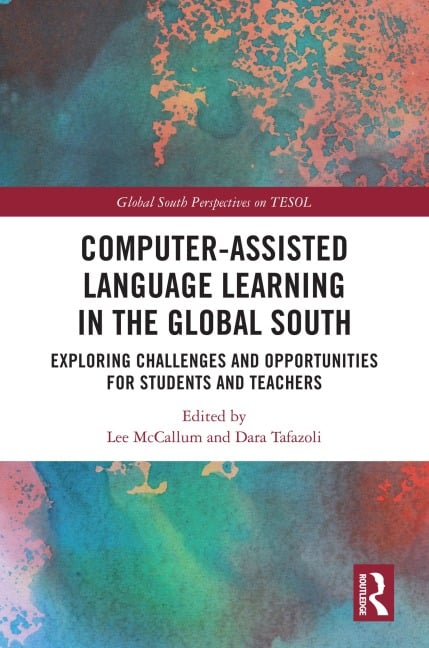
This cross-cultural edited volume presents a rich tapestry of experiences, challenges, and innovations, focusing on assessment, course and curriculum design, approaches to pedagogy and teacher professional development in computer-assisted language learning (CALL) in the Global South. Comprising chapters from a broad swathe of international contexts, the book presents varied themes in CALL such as inclusion and social justice, artificial intelligence, barriers to online language teaching, skills-based practices, and professional development. By shedding light on the underrepresented research contexts in the Global South, a number of current innovations in these contexts at theoretical and empirical levels are showcased, resulting in a highly novel and cutting-edge volume that gives voice to perspectives on the implementation of CALL in less-privileged countries. Providing comparative research and innovative ways in which CALL can be harnessed in less-privileged contexts despite lack of resources in some cases, this book will appeal to scholars, researchers, and postgraduate students in the fields of technology in education, language and linguistics, as well as open and distance education and eLearning. CALL and TESOL educators may also benefit from the book.
Lee McCallum is Lecturer in Assessment and Feedback, Edinburgh Napier University, UK. Dara Tafazoli is Research Officer, The University of Newcastle, Australia.
Preface PART I: Challenges and Opportunities in CALL Implementation Chapter 1: Key barriers to and enablers of integrating technology into online language teaching Chapter 2: Challenges in integrating computer-assisted language learning: Self-reflective insights from an ESL practitioner in Sri Lanka Chapter 3: Navigating slow Internet connection in CALL classes: Insights from Indonesia Chapter 4: Pedagogical efforts for inclusion and social justice: Integrating multimodal resources in multilingual and multicultural classrooms in Chile PART II: Challenges and Opportunities of Innovative Technologies Chapter 5: Opportunities and challenges of using artificial intelligence in language education: Perspectives from Vietnam Chapter 6: A Systematic Review of the Use of Metaverse in L2 English Education Chapter 7: Unravelling Indonesian EFL students' reluctance to use social media for speaking activities Chapter 8: Bridging the gaps in language learning through language Massive Open Online Courses (MOOCs) in the Global South: Perspectives from Thailand and Colombia PART III: Challenges and Opportunities in CALL Leadership and Professional Development of Pedagogical Approaches Chapter 9: Making the case for micro-level leadership in CALL integration in Vietnam Chapter 10: Continuing professional development for CALL teacher trainers in Vietnam: A gap between policy and practice Chapter 11: PART IV: Conclusion and Future Directions Chapter 12: Conclusion: Achievements and future potential for CALL in the Global South