
Stöbern
genialokal zum Startbildschirm hinzufügen
Installieren Sie die genialokal App auf Ihrem Startbildschirm für einen schnellen Zugriff und eine komfortable Nutzung.
Installieren Sie die genialokal App auf Ihrem Startbildschirm für einen schnellen Zugriff und eine komfortable Nutzung.
Tippen Sie einfach auf Teilen:
 Und dann auf "Zum Home-Bildschirm [+]".
Bei genialokal.de kaufen Sie online bei Ihrer lokalen, inhabergeführten Buchhandlung!
Ihr gewünschter Artikel ist in 0 Buchhandlungen vorrätig - wählen Sie hier eine Buchhandlung in Ihrer Nähe aus:

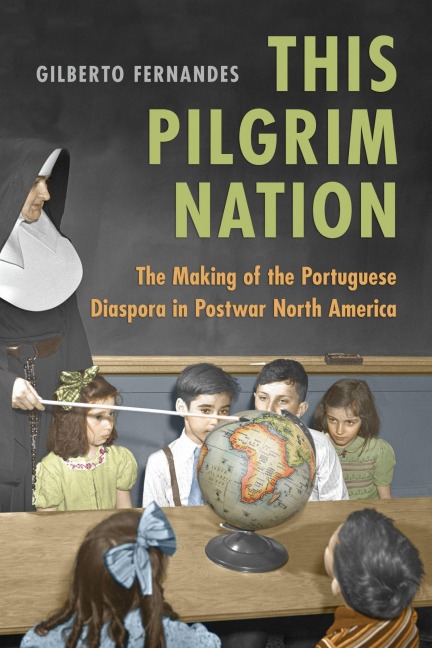
This book tells the transnational history of Portuguese communities in Canada and the United States against the backdrop of the Cold War, the American Civil Rights movement, the Portuguese Colonial War, and Canadian multiculturalism. It considers the ethnic, racial, class, gender, linguistic, regional, and generational permutations of "Portuguese" diaspora from both a transnational and comparative perspective. Besides showing that diasporas and nations can be co-dependent, This Pilgrim Nation counters the common notion that hybrid diasporic identities are largely benign and empowering by revealing how they can perpetuate asymmetrical power relations.
Dr. Gilberto Fernandes earned his doctoral degree in 2014 at York University, where he has since been a Post-Doctoral Visitor with the Robarts Centre for Canadian Studies and the Department of History. His research on the history of Portuguese migration, ethnicity, race, and international relations in North America has been published in various refereed journals. Together with his academic work, Dr. Fernandes is an active public historian and documentary filmmaker involved in multiple initiatives in Toronto, including the Portuguese Canadian History Project, of which he is co-founder and president since 2008; and the multidimensional project “City Builders: A History of Immigrant Construction Workers in Postwar Toronto,” winner of the 2019 Lieutenant Governor’s Ontario Heritage Award for Excellence in Conservation.
Introduction 1. Portuguese Migration: Numbers, Policies, and Perceptions 2. Making Diasporic Souls: Catholic Missionaries, National Parishes, and Transregional Charity 3. Making Ethnic Civil Societies: Working-Class Organizations, Community Elites, and Political Federations 4. Making Ethnic Culture: Folk Propaganda, Popular Culture, and Language 5. Making Imperial Citizens: Lusotropicalism, Public Memory, and the Multiracial Diaspora 6. The Radicals’ Diaspora: Anti-Fascists, War Resisters, and State Surveillance 7. New Beginnings, Old Journeys: Multicultural, Generational, and Political Transitions Conclusion Abbreviations Notes