
Stöbern
genialokal zum Startbildschirm hinzufügen
Installieren Sie die genialokal App auf Ihrem Startbildschirm für einen schnellen Zugriff und eine komfortable Nutzung.
Installieren Sie die genialokal App auf Ihrem Startbildschirm für einen schnellen Zugriff und eine komfortable Nutzung.
Tippen Sie einfach auf Teilen:
 Und dann auf "Zum Home-Bildschirm [+]".
Ihr gewünschter Artikel ist in 0 Buchhandlungen vorrätig - wählen Sie hier eine Buchhandlung in Ihrer Nähe aus:

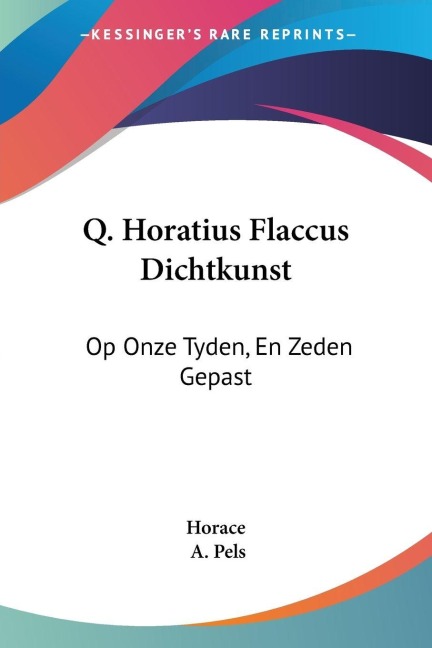
Het boek Q. Horatius Flaccus Dichtkunst: Op Onze Tyden, En Zeden Gepast: Den Edelen Groot-Achtbaaren Heere Kornelis Geelvink (1681) is een verzameling van gedichten geschreven door de Romeinse dichter Horatius. De gedichten zijn geschreven in het Latijn en zijn vertaald naar het Nederlands. Het boek is opgedragen aan Kornelis Geelvink, een Nederlandse politicus en diplomaat uit de 17e eeuw. De gedichten behandelen verschillende onderwerpen, zoals deugd, liefde, vriendschap en politiek. Het boek is een belangrijk werk in de klassieke literatuur en wordt nog steeds veel gelezen en bestudeerd.This Book Is In Dutch.This scarce antiquarian book is a facsimile reprint of the old original and may contain some imperfections such as library marks and notations. Because we believe this work is culturally important, we have made it available as part of our commitment for protecting, preserving, and promoting the world's literature in affordable, high quality, modern editions, that are true to their original work.
Quintus Horatius Flaccus (8 December 65 BC - 27 November 8 BC), known in the English-speaking world as Horace, was the leading Roman lyric poet during the time of Augustus. His career coincided with Rome's momentous change from a republic to an empire. An officer in the republican army defeated at the Battle of Philippi in 42 BC, he was befriended by Octavian's right-hand man in civil affairs, Maecenas, and became a spokesman for the new regime. Horace is often regarded as the world's first autobiographer. His writings tell far more about himself, his character, his development, and his way of life, than any other great poet of antiquity. Horace left Rome, possibly after his father's death, and continued his formal education in Athens, a great centre of learning in the ancient world, where he arrived at nineteen years of age, enrolling in The Academy. Founded by Plato, The Academy was now dominated by Epicureans and Stoics, whose theories and practises made a deep impression on the young man from Venusia. Meanwhile, he mixed and lounged about with the elite of Roman youth, such as Marcus, the idle son of Cicero, and the Pompeius to whom he later addressed a poem. It was in Athens too that he probably acquired deep familiarity with the ancient tradition of Greek lyric poetry, at that time largely the preserve of grammarians and academic specialists (access to such material was easier in Athens than in Rome, where the public libraries had yet to be built by Asinius Pollio and Augustus).
