
Stöbern
genialokal zum Startbildschirm hinzufügen
Installieren Sie die genialokal App auf Ihrem Startbildschirm für einen schnellen Zugriff und eine komfortable Nutzung.
Installieren Sie die genialokal App auf Ihrem Startbildschirm für einen schnellen Zugriff und eine komfortable Nutzung.
Tippen Sie einfach auf Teilen:
 Und dann auf "Zum Home-Bildschirm [+]".
Bei genialokal.de kaufen Sie online bei Ihrer lokalen, inhabergeführten Buchhandlung!

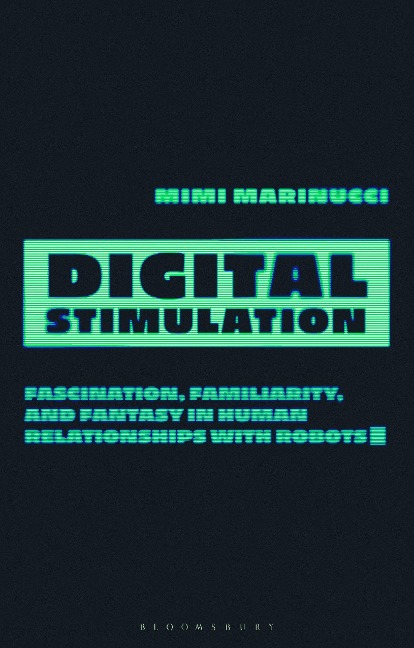
Digital Stimulation explores the subject of intimacy, including romantic and sexual intimacy, between human and nonhuman entities, particularly technological entities. As relationships between humans and machines become increasingly prevalent, it is important to address the potential for such relationships to reflect, to reinforce, or to reinvent existing hierarchies. The distinction between man and machine, like the distinction between man and beast, between man and brute, between man and nature, between man and woman, and so on, is an expression of the anthropocentrism and androcentrism permeating western ideas of self and other.
Concerns about the representation (or misrepresentation) and treatment (or mistreatment) of machines are of consequence for other human and nonhuman others as well, and this book details many of the ways in which depictions of machines, especially robots, mirror ideas and attitudes about various human and nonhuman others. This book also addresses the ongoing development of machines designed explicitly for intimate engagement with humans, such as sex robots. As they become more and more lifelike, it becomes progressively more urgent to cultivate compassion toward such machines.
Mimi Marinucci is Professor of Philosophy and of Gender, Women, and Sexuality Studies at Eastern Washington University, USA. Marinucci is the author of Feminism is Queer: The Intimate Connection Between Queer and Feminist Theory (Bloomsbury, 2010)
Acknowledgements
Introduction
1. Digital Technologies and Human Fingerprints
2. Fascination: Robots in Popular Media
3. Familiarity: Learning to Live with Robots
4. Humanity, Personhood and Feeling like a Robot
5. Fetish, Fantasy, and Sex with Robots
References
Index