
Stöbern
genialokal zum Startbildschirm hinzufügen
Installieren Sie die genialokal App auf Ihrem Startbildschirm für einen schnellen Zugriff und eine komfortable Nutzung.
Installieren Sie die genialokal App auf Ihrem Startbildschirm für einen schnellen Zugriff und eine komfortable Nutzung.
Tippen Sie einfach auf Teilen:
 Und dann auf "Zum Home-Bildschirm [+]".
Bei genialokal.de kaufen Sie online bei Ihrer lokalen, inhabergeführten Buchhandlung!

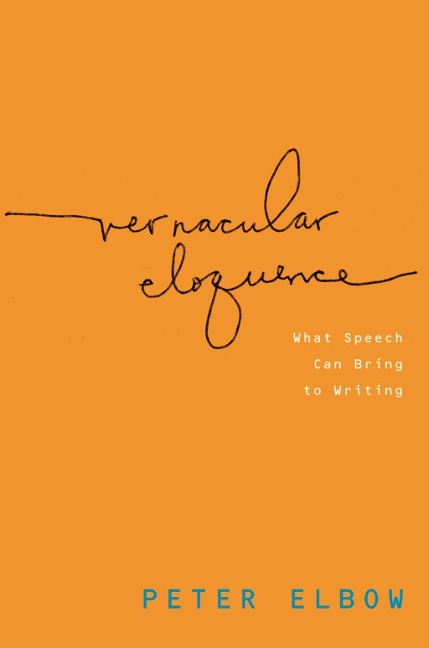
Since the publication of his groundbreaking books Writing Without Teachers and Writing with Power, Peter Elbow has revolutionized how people think about writing. Now, in Vernacular Eloquence, he makes a vital new contribution to both practice and theory. The core idea is simple: we can enlist virtues from the language activity most people find easiest-speaking-for the language activity most people find hardest-writing. Speech, with its spontaneity, naturalness of expression, and fluidity of thought, has many overlooked linguistic and rhetorical merits. Through several easy to employ techniques, writers can marshal this "wisdom of the tongue" to produce stronger, clearer, more natural writing. This simple idea, it turns out, has deep repercussions. Our culture of literacy, Elbow argues, functions as though it were a plot against the spoken voice, the human body, vernacular language, and those without privilege-making it harder than necessary to write with comfort or power. Giving speech a central role in writing overturns many empty preconceptions. It causes readers to think critically about the relationship between speech, writing, and our notion of literacy. Developing the political implications behind Elbow's previous books, Vernacular Eloquence makes a compelling case that strengthening writing and democratizing it go hand in hand.
Peter Elbow is Professor of English Emeritus at the University of Massachusetts at Amherst and former director of its Writing Program. He is the author of Writing Without Teachers, Writing With Power, Embracing Contraries, and Everyone Can Write.
PART ONE. What's Best in Speaking And Writing? Introduction: Defining "Speech" and "Writing" 1. Speech and Writing as They Are Used: The Role of Culture 2. What's Good about Writing 3. Speaking as a Process: What Can It Offer Writing? 4. Speech as a Product: Eight Virtues in Careless Spoken Language that Careful Writing Needs 5. Intonation: A Virtue for Writing Found at the Root of Everyday Speech 6. Can We Really Have the Best of Both Worlds? PART TWO. A Role for the Tongue During the Early Stages of Writing: Treating Speech as Writing Introduction: More Defining 7. What is Speaking Onto the Page and How Does Freewriting Teach it? 8. Where Else Do We See Unplanned Speaking onto the Page? 9. Objections to Speaking onto the Page--And Responses 10. The Need for Care: Unplanned Speaking onto the Page is Never Enough PART THREE. A Role for the Tongue During Late Revising: Reading Aloud and Treating Writing as Speech Introduction 11. Revising by Reading Aloud. What the Mouth and the Ear Know 12. How Does Revising by Reading Aloud Actually Work? 13. Punctuation: Living with Two Traditions 14. Good Enough Punctuation by Reading Aloud and Listening 15. How Speech Can Improve Organization in Writing: Form as Energy 16. Summary Chapter: The Benefits of Speaking onto the Page and Reading Aloud PART FOUR. Vernacular Literacy Introduction: Dante and Vulgar Eloquence 17. Our Present Culture of Proper Literacy and How It Tries To Exclude Speech 18. A New Culture of Vernacular Literacy is on the Horizon Appendix I. How Freewriting Went from Dangerous to No Big Deal in the Composition and Rhetoric Community Appendix II. A list of Publications Written in Nonprestige Nonstandard Versions of English Appendix III. A List of Published Works by Peter Elbow