
Stöbern
genialokal zum Startbildschirm hinzufügen
Installieren Sie die genialokal App auf Ihrem Startbildschirm für einen schnellen Zugriff und eine komfortable Nutzung.
Installieren Sie die genialokal App auf Ihrem Startbildschirm für einen schnellen Zugriff und eine komfortable Nutzung.
Tippen Sie einfach auf Teilen:
 Und dann auf "Zum Home-Bildschirm [+]".
Bei genialokal.de kaufen Sie online bei Ihrer lokalen, inhabergeführten Buchhandlung!

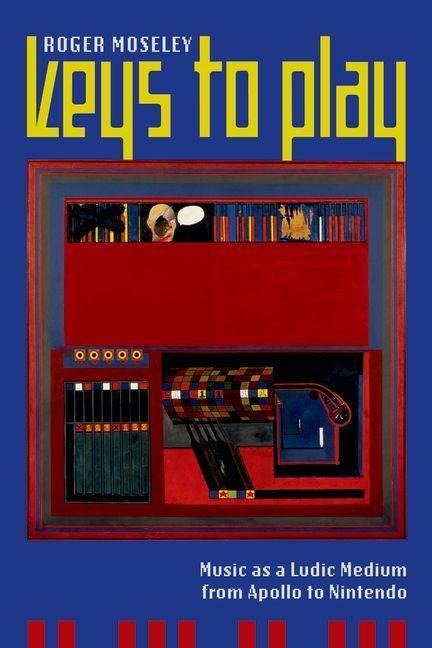
A free ebook version of this title is available through Luminos, University of California Press's Open Access publishing program for monographs. Visit www.luminosoa.org to learn more. How do keyboards make music playable? Drawing on theories of media, systems, and cultural techniques, Keys to Play spans Greek myth and contemporary Japanese digital games to chart a genealogy of musical play and its animation via improvisation, performance, and recreation. As a paradigmatic digital interface, the keyboard forms a field of play on which the book's diverse objects of inquiry-from clavichords to PCs and eighteenth-century musical dice games to the latest rhythm-action titles-enter into analogical relations. Remapping the keyboard's topography by way of Mozart and Super Mario, who head an expansive cast of historical and virtual actors, Keys to Play invites readers to unlock ludic dimensions of music that are at once old and new.
Roger Moseley is Assistant Professor of Music at Cornell University. Active as a collaborative pianist on modern and historical instruments, he has published essays on the interface of the keyboard, the performativity of digital games, the practice of eighteenth-century improvisation, and the music of Brahms.
Acknowledgments Prelude: Press Any Key to Start Part I. Fields and Interfaces of Musical Play Key 1. Ludomusicality 1-1 Orders of Play 1-2 Beyond Work and Play 1-3 The Sound of Gunplay 1-4 Bits and Beats 1-5 Playing Undead Key 2. Digital Analogies 2-1 Apollo 1, Marsyas 0 2-2 Notes on Keys 2-3 Interface Values 2-4 (Key)board Games and Temperamental Tactics 2-5 Tristan's Chord, Schoenberg's Voice Part II. Play by Play: Improvisation, Performance, Recreation Key 3. The Emergence of Musical Play 3-1 Unforeheard Circumstances 3-2 Pantomimes and Partimenti 3-3 From Black Box to Glassy Shell 3-4 The Case of Winkel's Componium 3-5 The Invisible Thumb on the Scale Key 4. High Scores: WAM vs. LVB 4-1 Unsettled Scores 4-2 Mozart's Two-Player Games 4-3 Concerted Action 4-4 Mozart and Mario Play the Field 4-5 Beethoven's Recursive Feedback Loops Key 5. Play Again? 5-1 Nintendo's Brand of Ludomusicality 5-2 Analogous Digitalities 5-3 The Ludomusical Emergence of Toshio Iwai 5-4 High Scores: Nodame Cantabile 5-5 Replay: A Cento Notes Bibliography Ludography Index