Und dann auf "Zum Home-Bildschirm [+]".

Stöbern
genialokal zum Startbildschirm hinzufügen
Installieren Sie die genialokal App auf Ihrem Startbildschirm für einen schnellen Zugriff und eine komfortable Nutzung.
Installieren Sie die genialokal App auf Ihrem Startbildschirm für einen schnellen Zugriff und eine komfortable Nutzung.
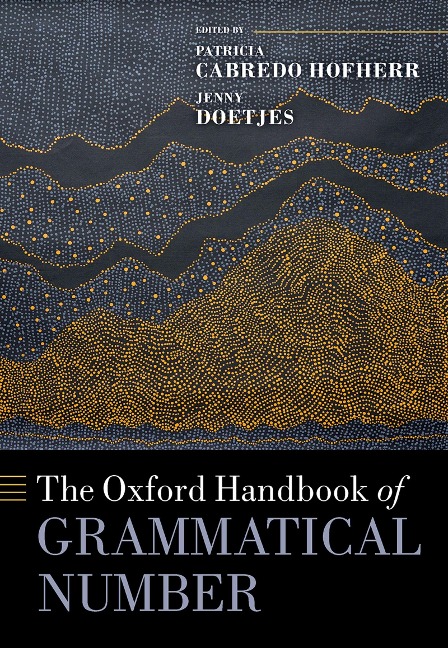
This volume offers detailed accounts of current research in grammatical number in language. Following a detailed introduction, the chapters in the first three parts of the book explore the multiple research questions in the field and the complex problems surrounding the analysis of grammatical number: Part I presents the background and foundational notions, Part II the morphological, semantic, and syntactic aspects, and Part III the different means of expressing plurality in the event domain.
The final part offers fifteen case studies that include in-depth discussion of grammatical number phenomena in a range of typologically diverse languages, written by - or in collaboration with - native speakers linguists or based on extensive fieldwork. The volume draws on work from a range of subdisciplines - including morphology, syntax, semantics, and psycholinguistics - and will be a valuable resource for students and scholars in all areas of theoretical, descriptive, and experimental linguistics.
Patricia Cabredo Hofherr is a Researcher at the Centre National de la Recherche Scientifique (CNRS). Her work examines the interaction between morphology, syntax, and semantics. Her recent research focuses on cross-linguistic variation in argument backgrounding strategies, including passives and indefinites, and on the distributive dependencies involving event pluralities. Jenny Doetjes is Professor of Semantics and Language Variation at the Leiden University Centre for Linguistics. Her research concentrates on cross-linguistic variation and similarity in relation to semantics and cognition. She has worked on various phenomena across typologically different languages, including the count-mass distinction, quantity expressions, the relation between quantity and gradability, and wh-in situ questions.
- 1: Patricia Cabredo Hofherr and Jenny Doetjes: Introduction - Part I: Foundations - 2: Jakub Dotlacil: Semantic approaches to number - 3: Alan Bale: Number and the mass-count distinction - 4: Jenny Doetjes: Number and quantity expressions - 5: Pierina Cheung: Individuation: Number marking languages vs classifier languages - 6: Niels O. Schiller and Rinus Verdonschot: Number in the mental lexicon - Part II: Number in the nominal domain - 7: Patricia Cabredo Hofherr: Nominal number morphology - 8: Martina Wiltschko: The syntax of number markers - 9: Henriëtte de Swart: Bare nouns and number - 10: Jenny Doetjes: Number and numeral classifiers - 11: Artemis Alexiadou: Lexical plurals - 12: Hanna de Vries: Collective nouns - 13: Myriam Dali and Éric Mathieu: Singulative systems - 14: Britta Biedermann, Nora Fieder, and Karen Smith-Lock: Nominal number and language pathologies - Part III: Number in the event domain - 15: Patricia Cabredo Hofherr: Verbal plurality cross-linguistically - 16: Sigrid Beck: Multiple events and 'N preposition N' - 17: Berit Gehrke: Multiple event readings and occasional-type adjectives - 18: Donka F. Farkas: Multiple event readings with dependent indefinites - Part IV: Case studies - 19: Nisrine Al-Zahre: Dual in Standard and Syrian Arabic - 20: Franc MaruSic and Rok Zaucer: Dual in Slovenian - 21: Scott Grimm: Inverse number in Dagaare - 22: Satoshi Tomioka: Japanese -tati and generalized associative plurals - 23: Lindsay Butler: Non-inflectional plural in Yucatec Maya: Syntax and processing - 24: Marcelo Ferreira: Bare nominals and number in Brazilian Portuguese - 25: Maarten Mous: Nominal number in Cushitic - 26: Lutz Marten: Noun classes and plurality in Bantu languages - 27: Moles Paul, Anne Zribi-Hertz, and Herby Glaude: Countability and number without number inflection: Evidence from Haitian Creole - 28: Suzi Lima: Production and comprehension studies on the mass-count distinction in Yudja - 29: Malte Zimmermann: Verbal number in Chadic, with special reference to Hausa - 30: Robert Henderson: Dependent numerals in Kaqchikel - 31: Roland Pfau and Markus Steinbach: Number in sign languages - 32: I Wayan Arka: Number in Marori - 33: I Wayan Arka and Mary Dalrymple: Number in Balinese - References - Index
Dieses eBook wird im PDF-Format geliefert und ist mit einem Adobe Kopierschutz (DRM) versehen. Sie können dieses eBook mit allen Geräten lesen, die das PDF-Format und den Adobe Kopierschutz (DRM) unterstützen.
Zum Beispiel mit den folgenden Geräten:
• tolino Reader
Laden Sie das eBook direkt über den Reader-Shop auf dem tolino herunter oder übertragen Sie das eBook auf Ihren tolino mit einer kostenlosen Software wie beispielsweise Adobe Digital Editions.
• Sony Reader & andere eBook Reader
Laden Sie das eBook direkt über den Reader-Shop herunter oder übertragen Sie das eBook mit der kostenlosen Software Sony READER FOR PC/Mac oder Adobe Digital Editions auf ein Standard-Lesegeräte mit epub- und Adobe DRM-Unterstützung.
• Tablets & Smartphones
Möchten Sie dieses eBook auf Ihrem Smartphone oder Tablet lesen, finden Sie hier unsere kostenlose Lese-App für iPhone/iPad und Android Smartphone/Tablets.
• PC & Mac
Lesen Sie das eBook direkt nach dem Herunterladen mit einer kostenlosen Lesesoftware, beispielsweise Adobe Digital Editions, Sony READER FOR PC/Mac oder direkt über Ihre eBook-Bibliothek in Ihrem Konto unter „Meine eBooks“ - „online lesen“.
Schalten Sie das eBook mit Ihrer persönlichen Adobe ID auf bis zu sechs Geräten gleichzeitig frei.
Bitte beachten Sie, dass die Kindle-Geräte das Format nicht unterstützen und dieses eBook somit nicht auf Kindle-Geräten lesbar ist.