Und dann auf "Zum Home-Bildschirm [+]".

Stöbern
genialokal zum Startbildschirm hinzufügen
Installieren Sie die genialokal App auf Ihrem Startbildschirm für einen schnellen Zugriff und eine komfortable Nutzung.
Installieren Sie die genialokal App auf Ihrem Startbildschirm für einen schnellen Zugriff und eine komfortable Nutzung.

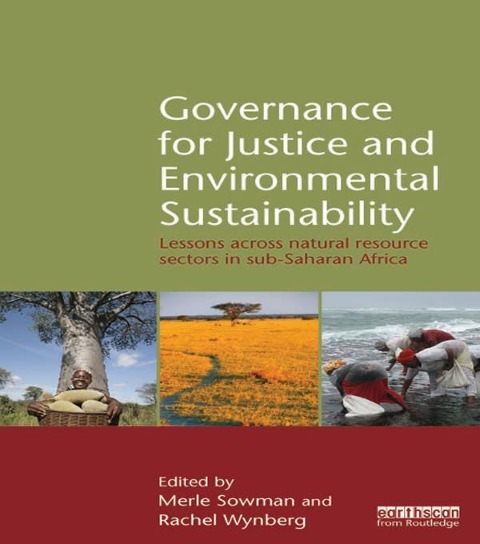

Understanding the governance of complex social-ecological systems is vital in a world faced with rapid environmental change, conflicts over dwindling natural resources, stark disparities between rich and poor and the crises of sustainability. Improved understanding is also essential to promote governance approaches that are underpinned by justice and equity principles and that aim to reduce inequality and benefit the most marginalised sectors of society. This book is concerned with enhancing the understanding of governance in relation to social justice and environmental sustainability across a range of natural resource sectors in Sub-Saharan Africa. By examining governance across various sectors, it reveals the main drivers that influence the nature of governance, the principles and norms that shape it, as well as the factors that constrain or enable achievement of justice and sustainability outcomes. The book also illuminates the complex relationships that exist between various governance actors at different scales, and the reality and challenge of plural legal systems in much of Sub-Saharan Africa. The book comprises 16 chapters, 12 of them case studies recounting experiences in the forest, wildlife, fisheries, conservation, mining and water sectors of diverse countries: Madagascar, Zimbabwe, Botswana, Namibia, South Africa, Zambia, Mozambique, Sierra Leone and Cameroon.Through insights from these studies, the book seeks to draw lessons from the praxis of natural resource governance in Sub-Saharan Africa and to contribute to debates on how governance can be strengthened and best configured to meet the needs of the poor, in a way that is both socially just and ecologically sustainable.
Merle Sowman is the Director of the Environmental Evaluation Unit and Associate Professor in the Department of Environmental and Geographical Science at the University of Cape Town (UCT), South Africa. Rachel Wynberg is Deputy Director of the Environmental Evaluation Unit and Associate Professor in the Department of Environmental and Geographical Science at the University of Cape Town (UCT), South Africa, where she holds a Research Chair on Social and Environmental Dimensions of the Bio-economy.
1. Introduction Merle Sowman and Rachel Wynberg 2. Governance for Justice and Environmental Sustainability: Theories and Concepts Kabiri Ngeta 3. Localising Global Environmental Governance Norms: Implications for Justice Melissa Hansen, Vasna Ramasar and Kent Buchanan 4. Governing Ancestral Land in Madagascar: Have Policy Reforms Contributed to Social Justice? Barry Ferguson, Charlie J. Gardner, Mijasoa M. Andriamarovolonona, Tim Healy, Frank Muttenzer, Shirley M. Smith, Neal Hockley and Mathilde Gingembre 5. Exclusionary Spaces: Power, Poverty and Community-based Natural Resource Management in West Africa Marlène Buchy and Roy Maconachie 6. Wildlife Paying Its Way? A Critical Analysis of Community-based Natural Resource Management in the Chobe Enclave, Botswana Clare Gupta 7. Community-based Conservation and Protected Areas: Commons Perspectives for Promoting Biodiversity and Social Justice in Southern Africa Arthur Hoole 8. Community-based Natural Resource Management: Micro-Governance and Face-to-Face Participatory Democracy Brian Child, Patricia Mupeta, Shylock Muyengwa and Rodgers Lubilo 9. Fisheries Co-Management in the Okavango Delta's Panhandle: The Okavango Fisheries Management Committee Case Study Belda Mosepele, Ketlhatlogile Mosepele, Shadrack Mogotsi, and Douglas Thamage 10. Shifting Gear: A New Governance Framework for Small-Scale Fisheries in South Africa Merle Sowman, Serge Raemaekers and Jackie Sunde 11. Legal Pluralism and the Governance of Freshwater Resources in Southern Africa: Can Customary Governance be Embedded Within the Statutory Frameworks for Integrate Water Resources Management? Sharon Pollard and Tessa Cousins 12. Customary Governance of Baobab in Eastern Zimbabwe: Impacts of State-led Interventions Witness Kozanayi, Rachel Wynberg and Frank Matose 13. Partnerships Are Not Forever: The Limits of Collaborative Governance in Diamond Mining in Namaqualand Ralph Hamann 14. Governance, Equity, and Sustainability in Non-Timber Forest Product Value Chains Rachel Wynberg and Jaci van Niekerk 15. Governing the Ungovernable? Climate Change and Social Justice in Southern Africa Penny Urquhart 16. Towards Robust Governance for Justice and Environmental Sustainability: Lessons from Natural Resource Sectors in Southern Africa Merle Sowman and Rachel Wynberg